
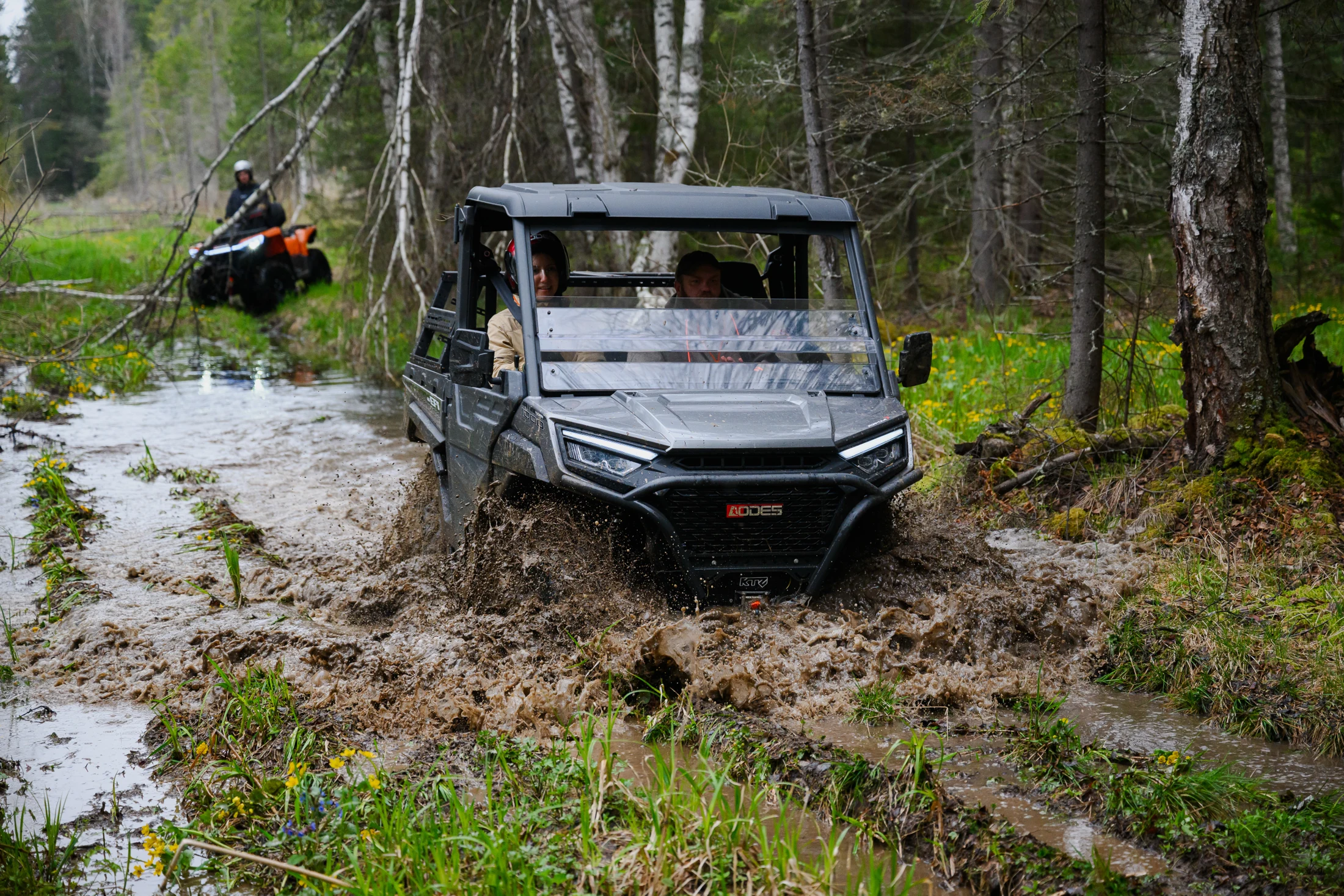
The landscape and the next stretch
A distant ridgeline can be the reason to go. The route takes shape much closer to the vehicle: a bend, a patch of loose stone, a familiar track that turns into something new. Looking forward means paying attention at both scales.
That is part of the appeal of an all-terrain ride. You are involved in the passage. The view does not simply move past a window; the surface, the machine and the decisions ahead belong to the same experience.
Begin with access
Before a route becomes your route, find out where your vehicle is permitted and which tracks are open. A marked route, a landowner conversation or a riding facility can provide a clearer starting point than a line found in a photograph.
Think about where the vehicle part of the day ends. A stop may lead to a walk, a working point or a turn for home. A useful route makes room for those changes instead of treating arrival as the only event.
Make space for different riders
A solo ATV rider and a friend driving a UTV can want the same horizon while needing different arrangements. Their equipment, stopping points and ways of reading the surface will not be identical.
Agree on the day you are sharing. The pace, the next meeting point and the return deserve a place in the conversation. A crew vehicle does not have to be full for the trip to make sense.
Bring the choice back to the machine
The model name is a beginning. Look at the riding position, the tires, the cab arrangement and the published equipment. Then compare those details with the places you actually expect to ride.
AODES product pages keep original US photographs and model sheets close to the choice. Take a shortlist and a description of your usual routes to a dealer. A more specific question is a better way to begin than asking for one machine to do everything.