
Pack around the next action
A load becomes easier to understand when you begin with what happens at the next stop. A case opens. A rope bag comes off. A personal layer stays close by. Each item has a reason to be where it is.
For a day that combines driving and walking, the transition matters. Equipment that travels well in a vehicle still needs to be manageable when somebody carries it beyond the stopping place.
Different machines, different arrangements
An ATV and a WorkCross do not organize the day in the same way. A compact rider bag, a protected case and a bed load belong in different conversations about access, space and the actual vehicle limits.
Start with the original information for the model you are considering. Discuss approved loading, restraint points and suitable equipment with the dealer. A photograph can suggest a use; the offered configuration determines the details.
Leave room for the handover
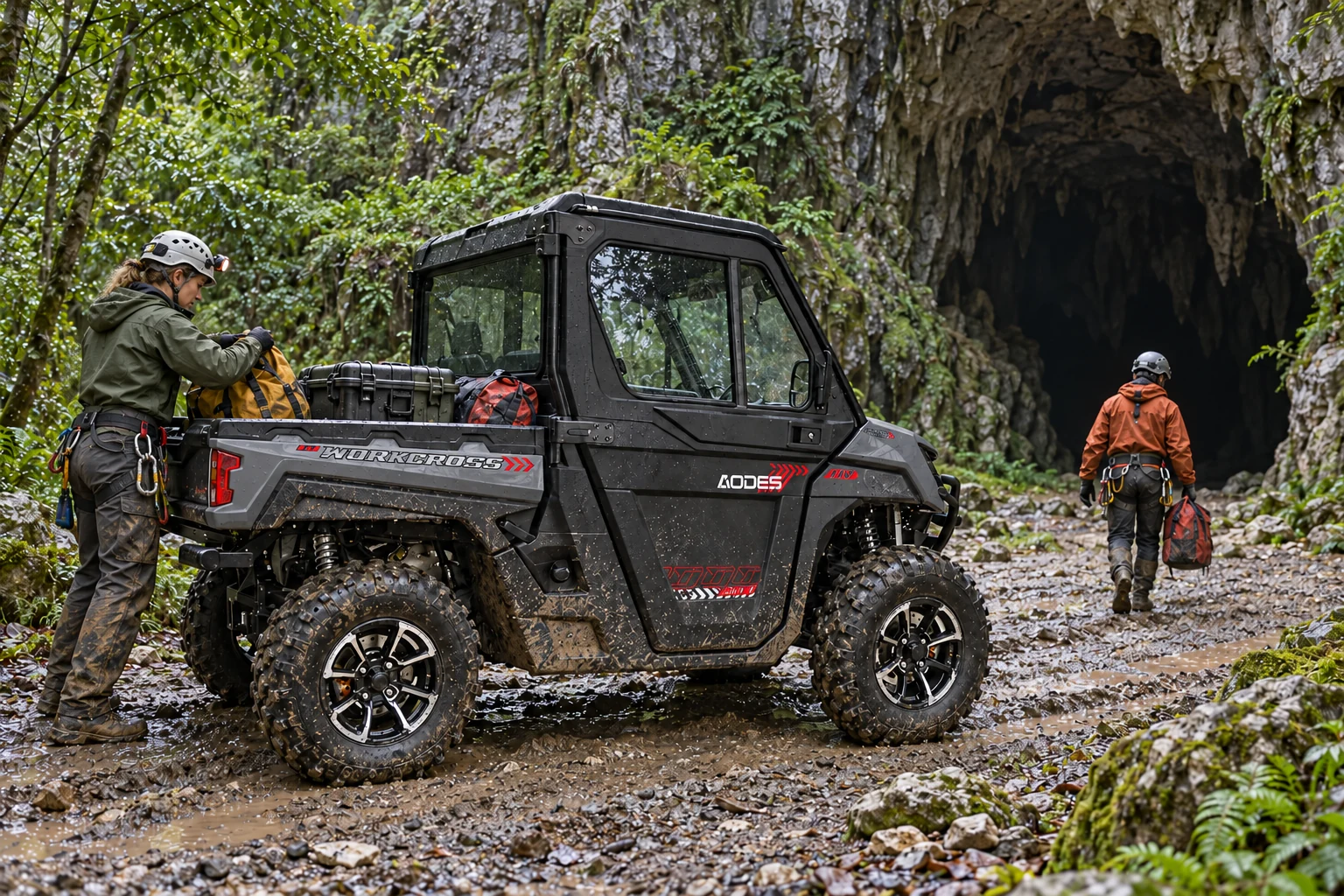
At a cave approach, the vehicle can remain outside while the next part of the exploration begins on foot. Rope bags and protected cases move from the bed to the people using them. The cab no longer needs an occupant.
The same way of thinking can help with a woodland stop or a field-access day. Think beyond fitting everything aboard. Consider the space, the order and the people needed when it comes off again.
Bring something back
The return load may be arranged differently from the outward one. Equipment has been used, clothing has met the weather and the vehicle carries the marks of the route. The plan should still have a place for everything.
What you carry is part of the character of a day: practical enough for the task, personal enough to tell you something about the people traveling. Give the essentials a clear place, then leave the landscape room to become the larger memory.